Fortnite 200-Player Lobbies Could Arrive With Unreal Engine 6, Tim Sweeney Hints
Fortnite Battle Royale could see 200-player lobbies with Unreal Engine 6, transforming gameplay and expanding online worlds.
Fortnite players who have spent years jumping into 100-player Battle Royale matches might soon see that number double. As of 2026, the standard Battle Royale mode still runs with 100-player lobbies, but that could change. During a recent interview with Matthew Ball, Epic Games founder and CEO Tim Sweeney hinted at the possibility of 200-player lobbies once Unreal Engine 6 arrives. It is a long-term vision, but it could change the feel of Fortnite and other online worlds built on Epic's technology.
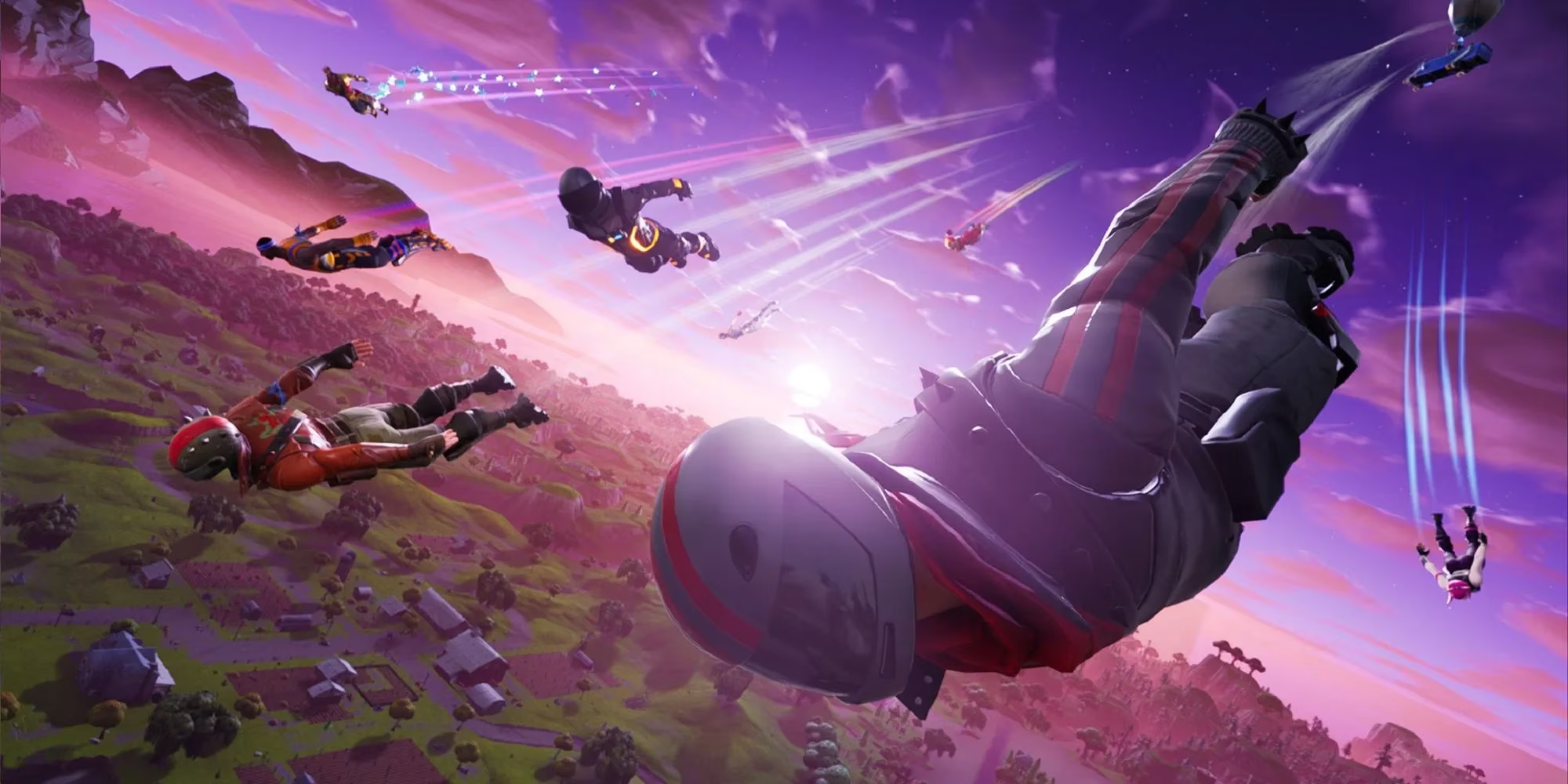
The current 100-player cap is not a design choice. Sweeney explained that when Fortnite launched in 2017, the studio simply could not make 200 players work on one server. “We couldn't make 200 players work on a server [at the time],” he said. The computers in data centers were too slow. That is why Fortnite was divided into a huge number of different islands. Each match became its own separate copy of the game world, running on its own slice of server power.
Since then, hardware has improved a lot. Graphics have gotten sharper, and the Unreal Engine has powered everything from small indie games to massive film productions. But one part of the engine has not changed much. Sweeney pointed out that the networking model in Unreal Engine 5 is remarkably similar to the one he built for Unreal Engine 1 in 1997. It shipped in Unreal and Unreal Tournament, and it has been incrementally improved since then without being dramatically upended.
That old networking model has a major weakness: it does not let Epic's servers talk to each other in a meaningful way. So even though there might be 10 million concurrent players online, they are all in their own separate shared copies of the world. They cannot see each other or interact across those copies. That is fine for a traditional 100-player Battle Royale match, but it limits what creators can build.
Sweeney did not sugarcoat the current state. He said, “We don't yet have the entire technology stack needed to robustly enable every creator to put their content together into a big, seamless open world if they wanted.” He called some of the things players see in Fortnite “current crutches” rather than the permanent end state of the medium. That is a strong signal that Epic is thinking far beyond battle royale.
With Unreal Engine 6, the networking overhaul is one of the big efforts. Sweeney described a future where servers support lots of players and can seamlessly move players between servers. A data center or multiple data centers would coordinate one huge simulation of millions, or maybe even a billion, concurrent players. That kind of scale sounds sci-fi, but it is exactly what would make 200-player lobbies and much larger persistent worlds possible.
For Fortnite players, the first noticeable change might be bigger lobbies. Imagine dropping onto the island with 199 other players instead of 99. The early game would be more chaotic, the mid-game more populated, and the final circles even more intense. It would also require careful tuning of loot, map size, and performance. Epic would need to make sure that 200-player matches stay smooth on a wide range of consoles, PCs, and mobile devices.
The table below sums up the shift Epic seems to be working toward:
| Current Fortnite Networking | Unreal Engine 6 Vision |
|---|---|
| 100 players per lobby | 200 players or more |
| Servers do not talk to each other | Servers coordinate across data centers |
| Separate copies of the same world | One connected, seamless simulation |
| Networking model rooted in 1997 | Modern networking stack rebuilt for scale |
There are still many unknowns. Sweeney did not give a release date for Unreal Engine 6, and he did not promise that 200-player Fortnite lobbies will arrive on day one. But the direction is clear. Epic wants to remove the technical crutches that have held back large shared online spaces. If the studio succeeds, the next generation of Fortnite could look very different from the 100-player island players know today.
That is an exciting prospect for both players and creators. More players per lobby means more stories, more chaos, and more reasons to squad up. For creators, it opens the door to true open worlds where thousands or millions of people could share one persistent space. Tim Sweeney's comments are a reminder that even a game as dominant as Fortnite is still built on old technical compromises. Unreal Engine 6 may finally be the moment those compromises start to disappear.
Data referenced from Entertainment Software Association (ESA) helps frame why Epic’s Unreal Engine 6 networking ambitions matter beyond Fortnite: as the industry pushes toward larger live-service worlds, scaling from 100-player instances to 200-player matches (and eventually interconnected server simulations) raises practical questions about infrastructure cost, accessibility across devices, and how engagement-driven experiences fit into broader market and policy trends shaping online games.
Leave a Reply