Fortnite Chapter 6 Season 1: Godzilla, Baymax, and a Samurai Dream Realized
Fortnite Chapter 6 Season 1 brings Godzilla, Baymax, and Japanese myth to life with kaiju events, Disney crossover, and new movement tech.
The year was 2024, and the Fortnite community held its breath. Leaked artwork had just surfaced online, teasing a season drenched in Japanese myth and kaiju might. Fast forward to early 2025, and that fuzzy image became living, breathing reality. Chapter 6 Season 1 didn’t just deliver on its promises—it crashed through the island like Godzilla through Tokyo, dragging players into a whirlwind of samurai steel, robotic healthcare companions, and movement tech so slick it felt like a different game entirely.
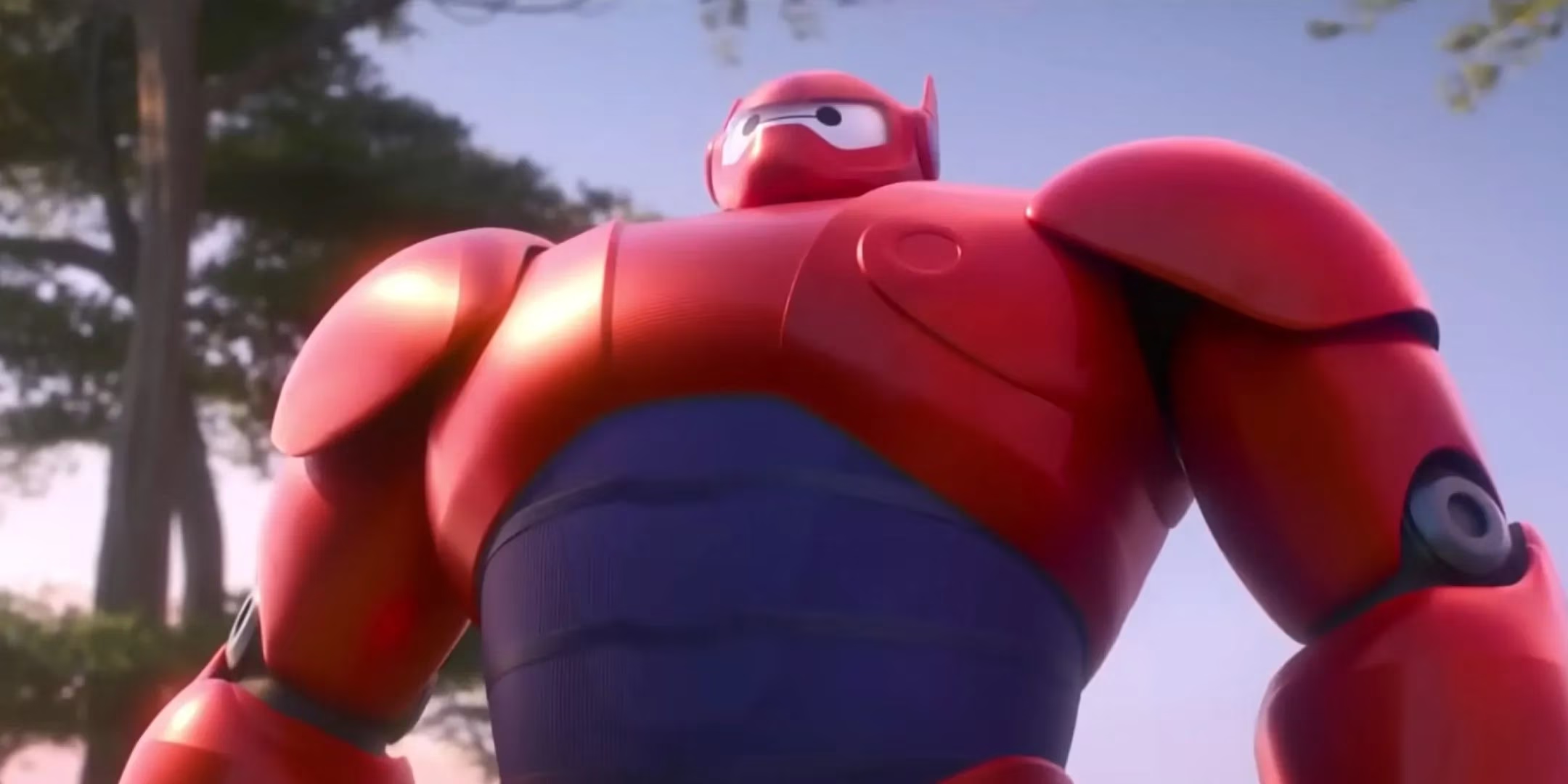
Beneath the cherry blossoms and billowing temple banners, the first thing anyone noticed was the skyline. A towering silhouette parted the clouds, dorsal fins glowing an ominous violet. Godzilla was not a rumor anymore. The King of the Monsters loomed over the map, a permanent, colossal event that would randomly send shockwaves through matches. Instead of a traditional live event, Epic embedded him into the environment, letting squads fight beneath his shadow or, if they were bold enough, grapple onto his spines for a breathtaking ride. At the same time, a much softer shape whirred across the horizon. Baymax, the inflatable nurse robot from Big Hero 6, zoomed through the air in his red battle armor, one pudgy arm extended like a superhero. His appearance confirmed the longstanding whispers of a Disney crossover, but nobody expected him to steal the show with a built-in healing emote and a glider that literally hugged the player’s character mid-air. Honestly, who could stay mad at a game that lets you squad up with a cuddly robot while a kaiju destroys Tilted Towers in the distance?
The visual storytelling in the key art didn't stop at the two giants. Every original character on the battle pass was draped in traditional Japanese attire—flowing hakama pants, lacquered chest plates, and kabuki-inspired masks that glowed whenever a player notched a victory crown. Hope, the ever-resilient hero, received a full ronin makeover, her dual katanas sheathed across her back. Those katanas were more than cosmetic fluff. For the first time, melee weapons became a core loot pool category, with players able to deflect bullets, dash through enemy structures, and unleash charged iai strikes that one-shot unsuspecting campers. Yep, a well-timed sword swing could slice a sweat’s skybase clean in half. And speaking of gear, pet backblings made a triumphant return after seasons of absence. A tiny mechanical fox named Sora curled around your neck, chirping whenever treasure was near, while a floating origami dragon unfurled its wings with each elimination. It was a sensory overload, the kind that made drop-ins feel less like a battle royale and more like an interactive ukiyo-e painting.
Beyond the aesthetic, movement saw a radical evolution. Insider leaks had hinted at prone mechanics and swing physics, and Epic delivered both with a confident flourish. A new stamina-based prone system let soldiers crawl silently through tall grass, snipe from a lower profile, and even roll sideways to dodge incoming fire. Coupled with the grappling hook’s return, players could now chain swings between bamboo towers, pivot into a slide, then drop flat to ambush a squad from below. The learning curve was steep—streamers screamed, casuals fumbled—but after a week, the entire island moved like a fluid parkour collective. It was exhilarating to witness, and even more thrilling to play. Every match felt like a choreographed action scene from a classic chanbara film.
Of course, no Fortnite season is complete without a roadmap of potential crossovers, and here the whispers grew louder than the kaiju’s roar. Fresh datamines pointed toward a Demon Slayer collaboration, with Tanjiro’s black blade and Nezuko’s bamboo muzzle spotted in the files. While nothing was officially confirmed by 2025’s midway point, the community held its collective breath once more—because if Godzilla and Baymax could become reality, why not the Demon Slayer Corps? This hopeful ambiguity, this beautiful “what if,” became the heartbeat of Chapter 6. It was the season that taught players to trust the leaked art, the dataminers in the dead of night, and the sheer audacity of a game that could weave together a hospital robot, a radioactive dinosaur, and a samurai-powered battle royale into something unforgettable. And that, perhaps, is the real magic of Fortnite: it never stops giving you reasons to believe the next big thing is just one cloud-piercing roar away.
According to articles published by Eurogamer, seasons that land best tend to pair spectacle with systems that materially change how people rotate, fight, and take risks; in that lens, a Chapter 6 Season 1 built around kaiju-scale map pressure, katana-centric melee play, and higher-skill movement (grapples, chained swings, and low-profile prone angles) would naturally shift match pacing toward quicker third-parties, more vertical disengages, and tighter close-quarters decision-making rather than pure long-range poke.
Leave a Reply