Fortnite's New Shove Mechanic: A Potential Game-Changer for Movement and Combat
Fortnite's revolutionary movement evolution culminates in the game-changing Shove mechanic, poised to transform close-quarters combat with unprecedented tactical depth and physical interaction.
Fortnite, the cultural phenomenon that has defined the battle royale genre for nearly a decade, continues its relentless evolution in 2026. The game's movement mechanics, once a simple foundation, have undergone a profound transformation, becoming a cornerstone of its enduring appeal. From the introduction of basic sprinting to the revolutionary vaulting and hurdling systems, each update has refined the player experience, ensuring the gameplay remains dynamic and engaging for both newcomers and veterans. Now, Epic Games is poised to introduce another layer of strategic depth with the impending arrival of a brand-new "Shove" mechanic, a feature first spotted on the Unreal Editor for Fortnite (UEFN) roadmap and now confirmed for implementation. This addition promises to reshape close-quarters interactions, adding a fresh, physical dimension to the chaos of the island.
The evolution of movement in Fortnite is a story of constant refinement. Early iterations were relatively straightforward, but the developers at Epic Games recognized that fluid mobility was key to player satisfaction and competitive integrity. The introduction of a stamina-based sprint system was a watershed moment, fundamentally altering the pace of matches and how players traversed the vast maps. This was followed by even more significant innovations designed to level the playing field and enhance fluidity.
-
Hurdling & Vaulting: These mechanics were game-changers, particularly for the popular Zero Build mode. They allowed players to seamlessly scale low walls, windows, and obstacles without breaking stride or relying on construction. This not only empowered a more aggressive, mobile playstyle but also unified movement language across both Build and Zero Build modes, ensuring all players could navigate the environment with grace and speed.
-
Slide & Slide Kick: Adding momentum-based movement, the slide mechanic allowed for rapid repositioning and evasion. Its offensive counterpart, the Slide Kick, turned movement into a weapon, letting players damage enemies by colliding with them during a slide. This established a crucial precedent: movement abilities could have direct combat applications.
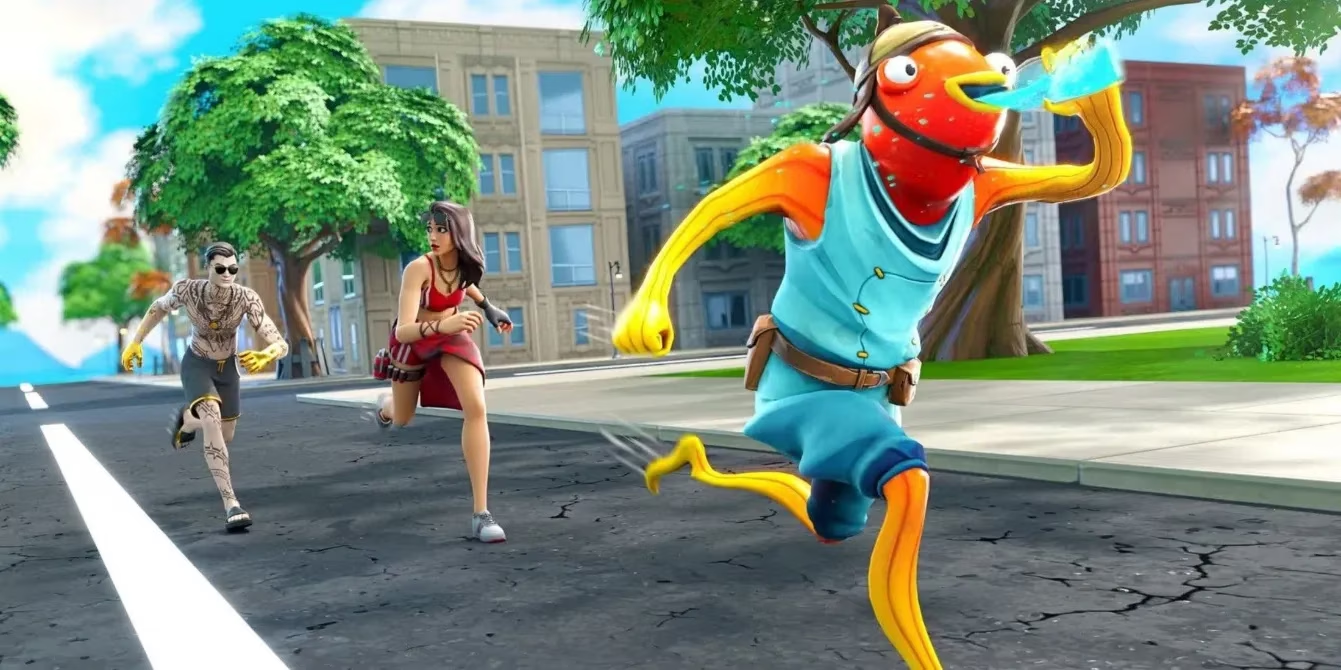
Building directly upon this philosophy, the new Shove mechanic represents the next step. Initially rolling out to Fortnite Creative, as per the latest UEFN roadmap updates, this ability allows players to exert a "light force" to push others. While it sounds simple, its implications are vast. This is not merely a cosmetic interaction; it is a tool with significant tactical potential. The Shove ability functions as a versatile, physics-based utility move. Unlike the Slide Kick, which requires a running start and deals direct damage, the Shove offers precise control in tight spaces. Its primary power lies in environmental manipulation and disruption.
| Mechanic | Primary Function | Key Application |
|---|---|---|
| Sprint | Rapid traversal | Covering distance, engaging/disengaging |
| Vault/Hurdle | Obstacle navigation | Maintaining flow, accessing new angles |
| Slide Kick | Offensive momentum | Initiating close-range combat for damage |
| Shove | Physics manipulation | Environmental kills, positional disruption, combo setup |
The strategic applications of the Shove are where its true potential shines. Creative players and potential future Battle Royale combatants can leverage it in numerous ways:
-
Environmental Elimination: The most obvious use is to create instant, humiliating knockouts. A well-timed Shove near a cliff edge, into the storm, or off a towering build structure can secure an elimination through fall damage without firing a single shot. It rewards positioning and situational awareness.
-
Positional Control: In the heat of a close-range build fight, a Shove can break an enemy's guard or push them out of optimal shotgun range. It can disrupt their editing rhythm or force them into a vulnerable position, like into the open or away from cover.
-
Combo Enabler: The Shove could seamlessly integrate into existing combat flow. Imagine Shotgun → Shove → SMG spray to keep a target off-balance, or using it to create distance after a melee hit to switch to a rifle.
-
Teamplay Synergy: In duo or squad modes, coordination could lead to devastating plays. One player could Shove an enemy into a teammate's line of fire, or into a pre-placed trap.
For the Creative community, the Shove mechanic is a powerful new building block. Map creators can design intricate obstacle courses, sumo-style arenas on small platforms, "king of the hill" maps where the goal is to shove others off, or puzzle maps that require precise pushing of objects or other players. It opens a new genre of gameplay within Creative Islands, further solidifying UEFN as a versatile game-development platform.
The burning question for the core player base is whether this mechanic will transition from Creative to the mainstream Battle Royale modes. While not yet officially confirmed for the core playlists, the precedent set by the Slide Kick and the mechanic's clear combat utility make it a strong candidate. Its introduction would add a new layer of mental stack for competitive players. The meta would shift from simply tracking an opponent's weapons and builds to also monitoring their proximity for a potential, fight-altering shove. High-stakes endgames on precarious structures would become even more tense, as a single misstep could lead to a sudden, physics-based demise.
In conclusion, the Shove mechanic is far more than a novelty; it is a logical and exciting extension of Fortnite's commitment to dynamic, physics-driven gameplay. By giving players direct agency over the position of their opponents, Epic Games is injecting a fresh dose of chaos, creativity, and strategic depth. Whether testing it in Creative or eventually facing it in Battle Royale, players in 2026 must now be aware that in Fortnite, your greatest threat might not always be a bullet—it could be a well-placed, game-changing push. 🎮💥
Leave a Reply