Fortnite’s Virtual Sneaker Empire: How Kicks Reshaped Gaming Fashion
Fortnite's Kicks bring Nike Air Jordans, transforming the battle royale into a digital sneaker paradise.
When the digital smoke cleared from Fortnite’s \"Fortnite: Remix: The Prelude\" event in November 2024, players found themselves awash in a spectacle of hip-hop mini-concerts and cinematic reveals. Snoop Dogg’s mansion had become a point of interest, Ice Spice and an updated Eminem skin were announced, and a tribute to Juice WRLD lingered in the air. Yet, nestled within that bombastic trailer was a detail so fleeting it nearly evaporated—a pair of Nike’s Air Jordan sneakers, peeking out from an outfit like a secret whispered into a hurricane. At that moment, few realized they were witnessing the first ripple of a tidal shift that would, by 2026, transform Fortnite into not just a battle royale but a sprawling digital sneakerhead paradise.
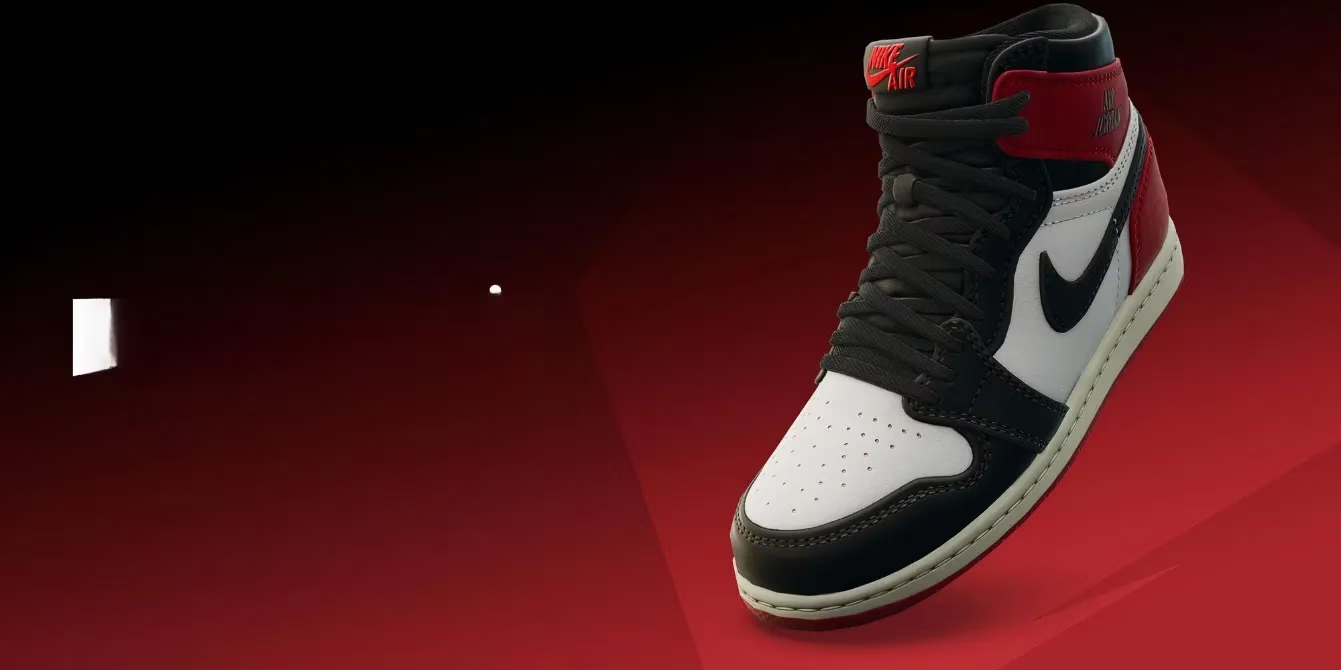
In the days following that reveal, Epic Games confirmed what the keen-eyed had suspected: Kicks were coming. Launching on November 12, 2024, as part of the Remix Pass, these cosmetic sneakers would let players lace their characters in iconic footwear—initially from Nike and Jordan, alongside a set of original Fortnite designs. The promise was both simple and audacious: over 500 outfits would be compatible at launch, with more than 95% of all skins ready by Spring 2025. For a game where self-expression was already a currency, this was like handing the crowd an infinite palette of pigments in a world that had only known primary colors.
From those humble beginnings, Kicks evolved into a phenomenon that mirrored—and sometimes surpassed—real-world sneaker culture. By 2026, walking through Fortnite’s item shop felt less like browsing a video game store and more like stepping into a high-end boutique where digital leather was handled with the reverence of a cathedral’s stained glass. Adidas, New Balance, Balenciaga, and even unexpected collaborators like Crocs had joined the roster, each drop greeted with the fervor of a thousand virtual campfires. The virtual sneaker, once a mere accessory, had become a silent storyteller—each pair a narrative of allegiance, nostalgia, or prestige worn on the feet of avatars that danced through zero-build chaos.
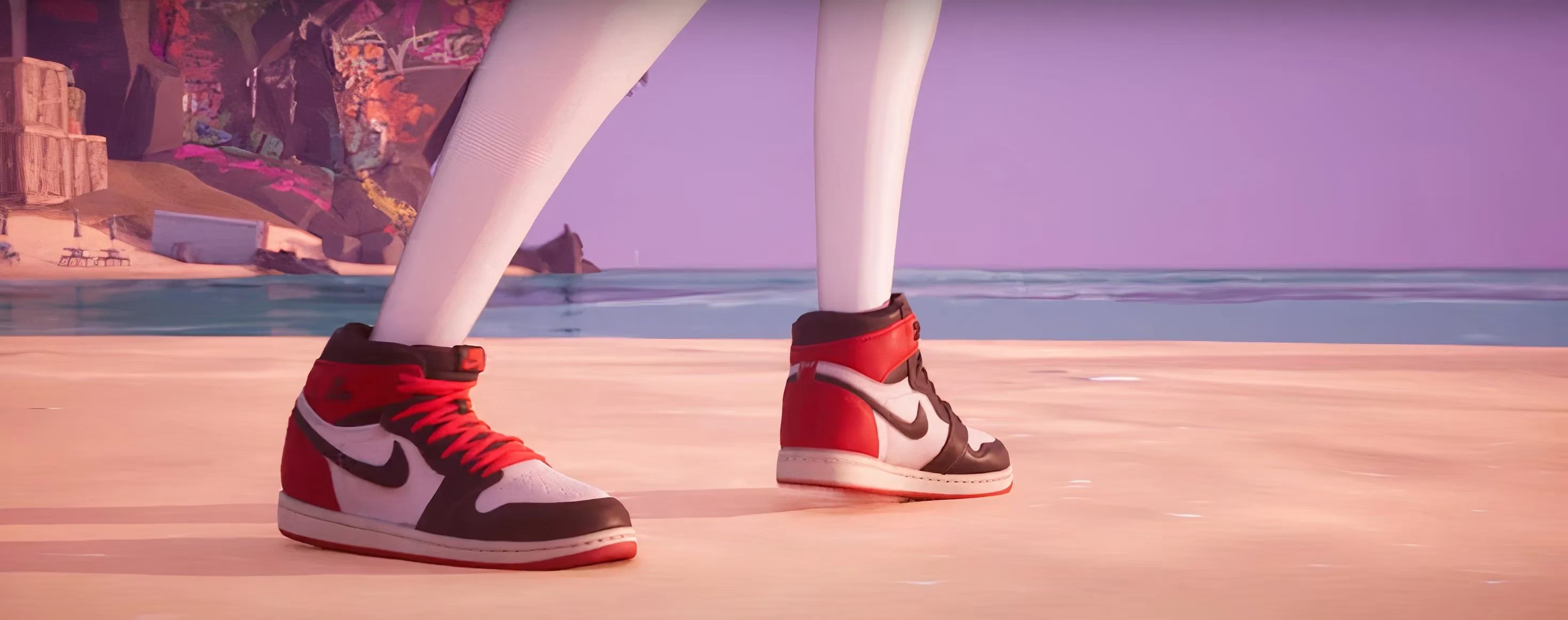
The game’s economy adapted with the swiftness of a chameleon on a checkerboard. Kicks introduced a new layer of social stratification: owning a limited-edition pair of virtual Travis Scott Jordans could elevate a player’s status more effectively than any victory crown. Markets on third-party platforms hummed with trades, and some rare digital sneakers attained prices that bled into real-world value—a paradox that felt both absurd and inevitable. Epic, ever the architect, nurtured this ecosystem without suffocating it, teasing future drops with the cryptic elegance of a poet scattering breadcrumbs.
Yet the true genius of Kicks lay in their emotional resonance. For a generation raised on battle passes and loot boxes, these sneakers were more than polygons and shaders; they were digital chameleons that let players project fleeting identities. A teenager in a small town could don a pair of Air Maxes and walk through Tilted Towers with the same swagger as their idols, the sneakers acting as a bridge between the mundane and the mythic. The anxiety of missing a drop became a shared cultural heartbeat, and the joy of unboxing a coveted pair—complete with a virtual shoebox animation—was a ritual as satisfying as the first sip of morning coffee.
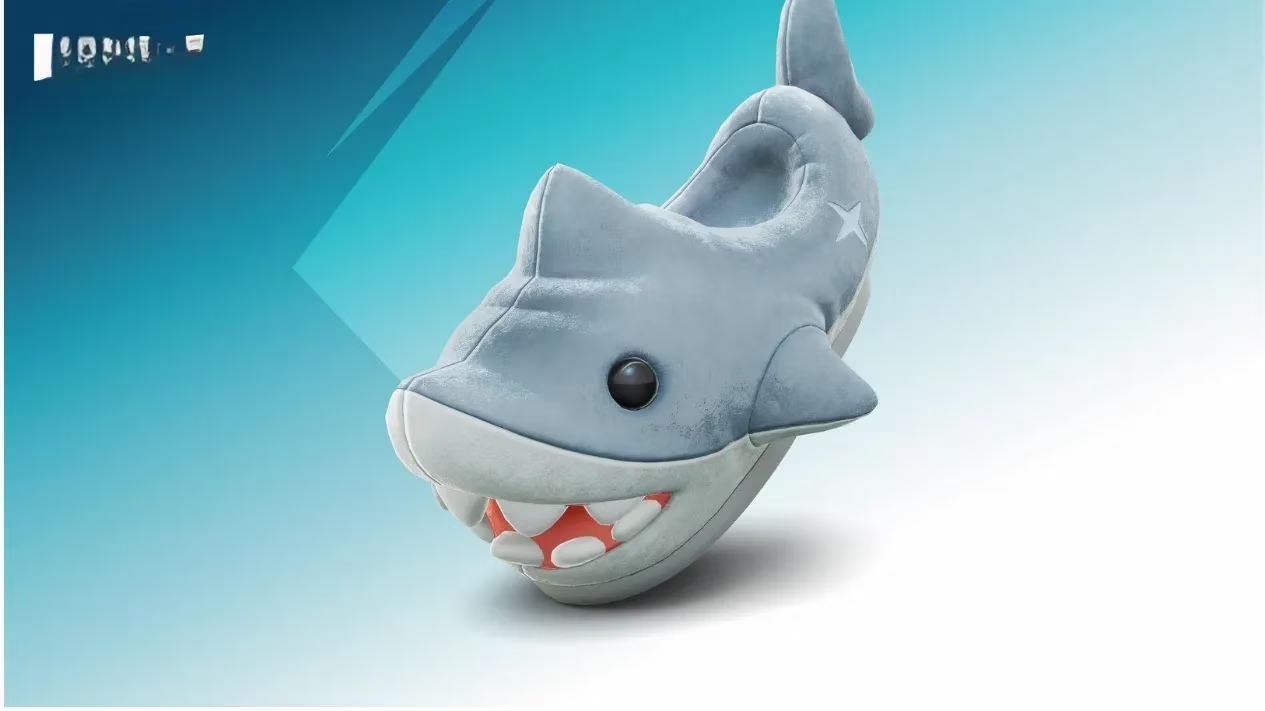
Technical hurdles that initially left a handful of outfits incompatible faded into memory as Epic’s art teams worked with the intensity of watchmakers recalibrating a thousand tiny gears. By Spring 2025, nearly every skin—including those with unconventional foot shapes—had been retrofitted to support Kicks, a feat of digital tailoring that underscored the developer’s commitment. The few remaining holdouts became curious relics, fossils from an era before the sneaker revolution, occasionally teased by collectors who treated them like misprinted stamps.
The impact rippled outward. Real-world brands began designing sneakers specifically with the Fortnite silhouette in mind, blurring the line between physical and virtual exclusivity. A limited-run Nike Dunk released simultaneously in stores and in the item shop became a blueprint for a new kind of launch—a hybrid event that turned shopping into a transdimensional scavenger hunt. In 2026, the question was no longer whether a popular sneaker would appear in Fortnite, but when, and what in-game quest would accompany its arrival. Snoop Dogg’s mansion, now a permanent fixture, even hosted sneaker-themed challenges that rewarded players with exclusive colorways.
Looking back, it’s clear that the blink-and-you’ll-miss-it moment from the Remix trailer was not an easter egg but a declaration. It was the first resonant note of a symphony that would swell to redefine gaming cosmetics. The virtual sneaker had become a connoisseur’s emblem, a pixelated passport that said, “I was there, I am here, and I will be remembered.” In Fortnite’s ever-shifting landscape, where islands sink and realities warp, the Kicks stayed—a steady footprint in a world that never stops dancing.
Leave a Reply