The Decade-Defining Games That Shaped Modern Gaming Culture
Explore how Dark Souls and Minecraft revolutionized gaming, reshaping genres and inspiring creativity across the digital landscape.
As the gaming industry ballooned from niche hobby to global entertainment juggernaut throughout the 2010s, a handful of titles didn't just ride the wave—they became the wave itself. These weren't mere games; they were cultural earthquakes that reshaped landscapes, redefined genres, and rewired how millions experienced interactive entertainment. From blockbuster epics that blurred lines between cinema and gaming to pixel-perfect indies that punched far above their weight class, the decade served up a smorgasbord of experiences whose echoes still reverberate in 2026. Let's dive into the digital time capsule and examine the ten titans that didn't just fill our screens but filled our collective consciousness.
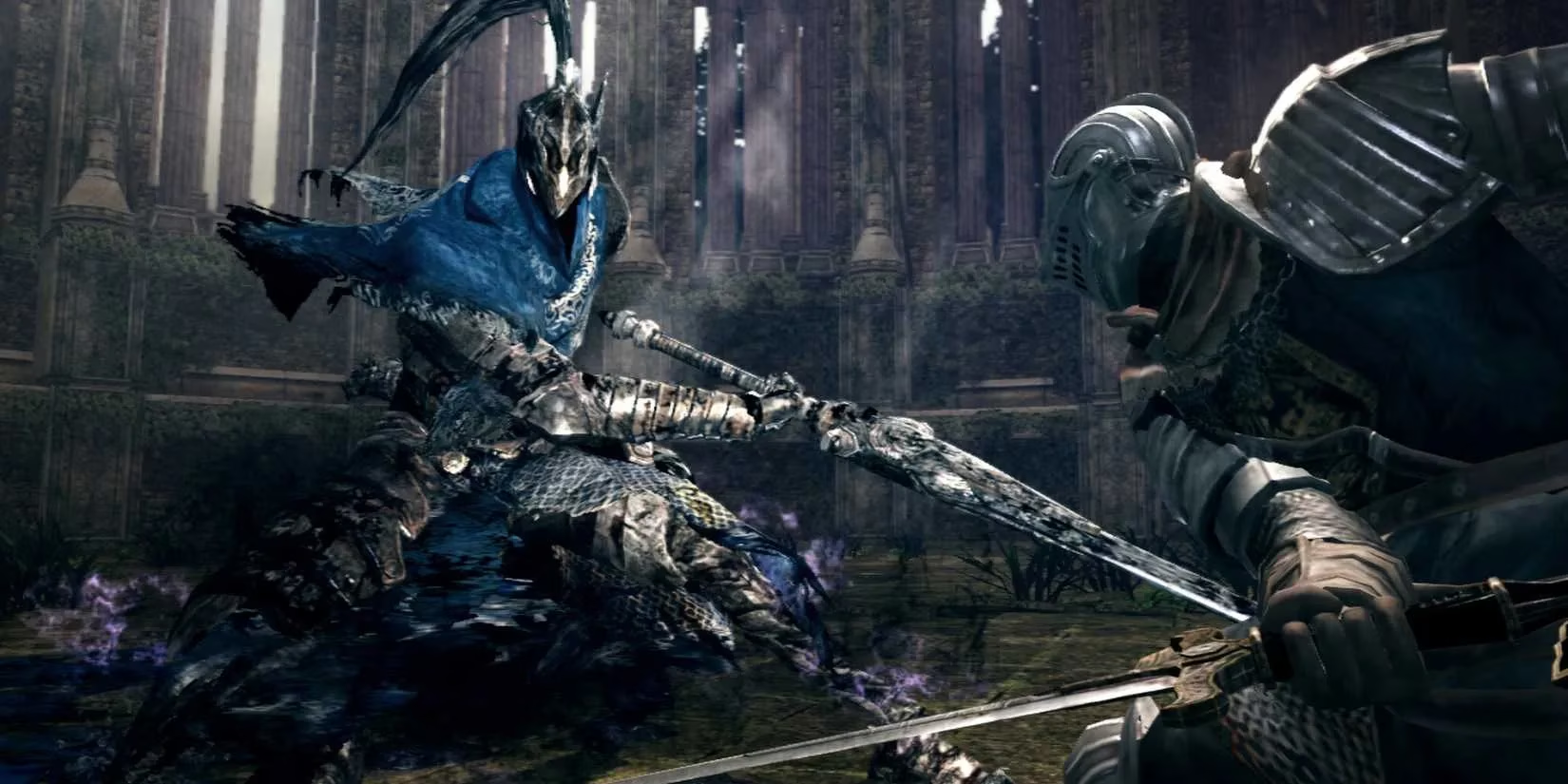
Dark Souls: The Unlikely Architect 🏰
Who would've thought a brutally difficult fantasy RPG about cursed undead would become the decade's most influential design template? Dark Souls did precisely that, spreading its DNA across genres like a benevolent (yet punishing) plague. Its genius wasn't in inventing difficulty but in weaponizing it as a narrative device—every death told a story about persistence. The game's fragmented storytelling approach, where lore hid in item descriptions and environmental clues, inspired developers everywhere to trust players' intelligence. Suddenly, shooters had bonfire-like checkpoints, platformers incorporated deliberate combat rhythms, and even puzzle games adopted that signature "aha!" moment structure. The Souls-like genre exploded, but more impressively, Souls-thinking infiltrated everything. Its legacy? Teaching an industry that challenge isn't antithetical to accessibility—it's the gateway to unforgettable achievement.
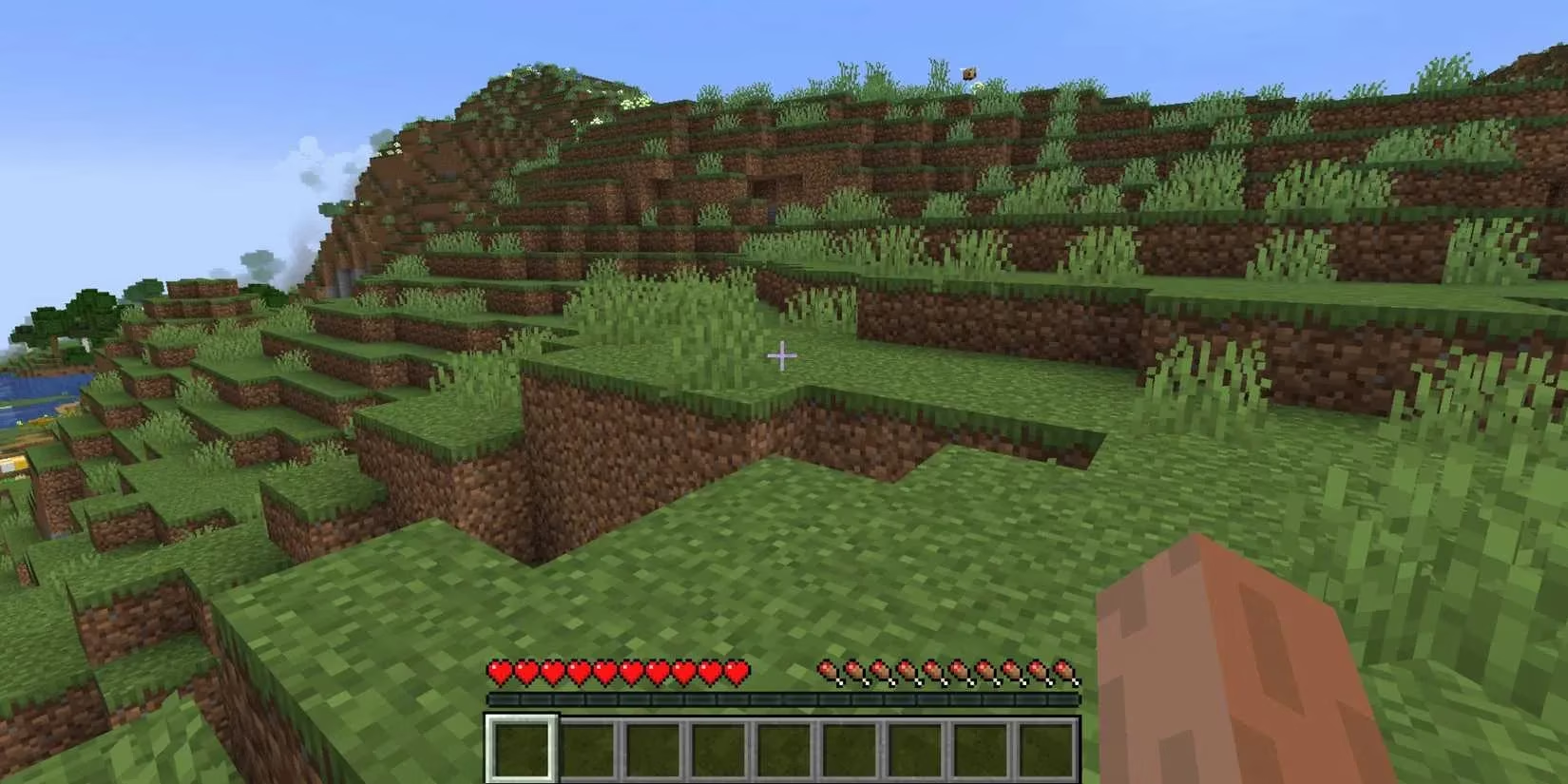
Minecraft: The Digital Lego Universe ⛏️
If Dark Souls was the decade's stern professor, Minecraft was its endlessly generous kindergarten teacher. This pixelated sandbox did the impossible: it became both the best-selling game of all time and an educational tool, a creative suite, and a social platform all rolled into one. Mojang's masterpiece demonstrated that limitations breed creativity—with simple blocks and basic systems, players built everything from working computers to scale models of entire cities. Its cultural penetration was staggering:
-
Generational Bridge: Toddlers learned basic logic with redstone circuits while grandparents explored serene landscapes
-
Educational Tool: Classrooms worldwide used it to teach everything from history to programming
-
Creative Catalyst: YouTube and Twitch careers launched from Let's Play series
What began as an indie passion project evolved into a universal language of creation, proving that sometimes the most revolutionary ideas are also the simplest.
Fortnite: The Entertainment Ecosystem 🎪
Epic Games started with a cooperative tower defense game and somehow birthed a cultural singularity. Fortnite's Battle Royale mode didn't just popularize a genre—it created a persistent digital destination where gaming, socializing, and pop culture collided. The game's real innovation was recognizing that modern players don't just want a game; they want a living, breathing platform. Its seasonal model with battle passes became industry standard, but its true magic was transforming into a virtual town square where you could watch a Travis Scott concert, attend a Christopher Nolan film premiere, or just hang out with friends. While other games struggled with player retention, Fortnite became a service, a social network, and an entertainment hub that continuously refreshed itself through collaborations with every major franchise imaginable. Its legacy? Proving games could be evergreen platforms rather than disposable products.
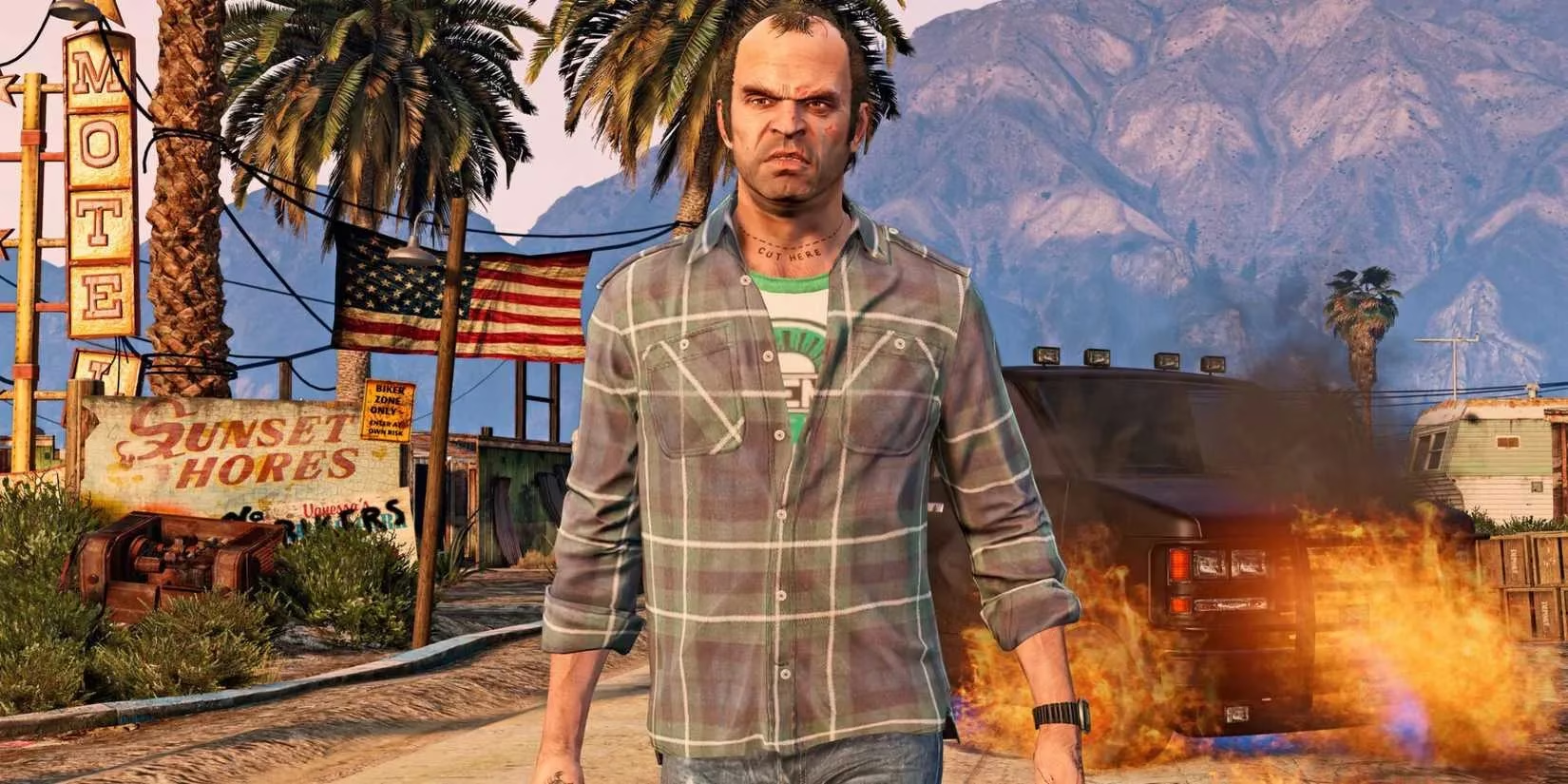
Grand Theft Auto V: The Perpetual Money Machine 💸
Rockstar's crime epic achieved something previously thought impossible: it remained commercially and culturally dominant across three console generations. While most games enjoy a brief moment in the sun before fading into discount bins, GTA V became a permanent fixture through sheer gravitational pull. Its secret sauce? A perfect duality:
| Single-Player | Online Multiplayer |
|---|---|
| Cinematic storytelling | Endless emergent gameplay |
| Character-driven narrative | Player-driven economy |
| Contained experience | Constantly evolving world |
The game's online component, GTA Online, became a phenomenon within a phenomenon, receiving updates for over a decade that transformed Los Santos into gaming's most vibrant (and chaotic) sandbox. Its financial success rewrote publisher expectations about game longevity, while its satirical take on modern America remained painfully relevant year after year.
The Elder Scrolls V: Skyrim: The Modder's Paradise 🐉
Bethesda didn't just create a fantasy RPG; they created a canvas for millions of creators. Skyrim's brilliance lay in its openness—not just its vast snowy landscapes, but its welcoming embrace of player modification. The game became a case study in community-driven longevity, with mods ranging from graphical overhauls to entirely new campaigns keeping the game relevant for over a decade. This symbiotic relationship between developer and community demonstrated a powerful truth: when you trust players with your tools, they'll extend your game's life indefinitely. The game also served as a gateway drug for countless new gamers during the Let's Play boom, its accessible systems and atmospheric world providing perfect viewing material. Even in 2026, new mods continue to surface, proving that some worlds never truly fade—they just get more detailed with time.
Red Dead Redemption 2: The Pinnacle of Polish 🤠
If Rockstar's earlier GTA V showed how to make a living game world, Red Dead Redemption 2 demonstrated how to make a breathing one. Every snowflake that accumulated on Arthur Morgan's beard, every realistic horse testicle contraction in cold weather (yes, really), every campfire conversation that unfolded organically—these weren't just technical achievements but philosophical statements about immersion. The game represented the absolute zenith of AAA production values, a swan song for an era of single-player epics before live-service models dominated. Its attention to detail created stories within stories: players shared anecdotes about stumbling upon random encounters that felt scripted but were entirely systemic. While not particularly innovative in structure, it perfected the art of virtual verisimilitude, creating a world that felt less like a playground and more like a place you temporarily inhabited.
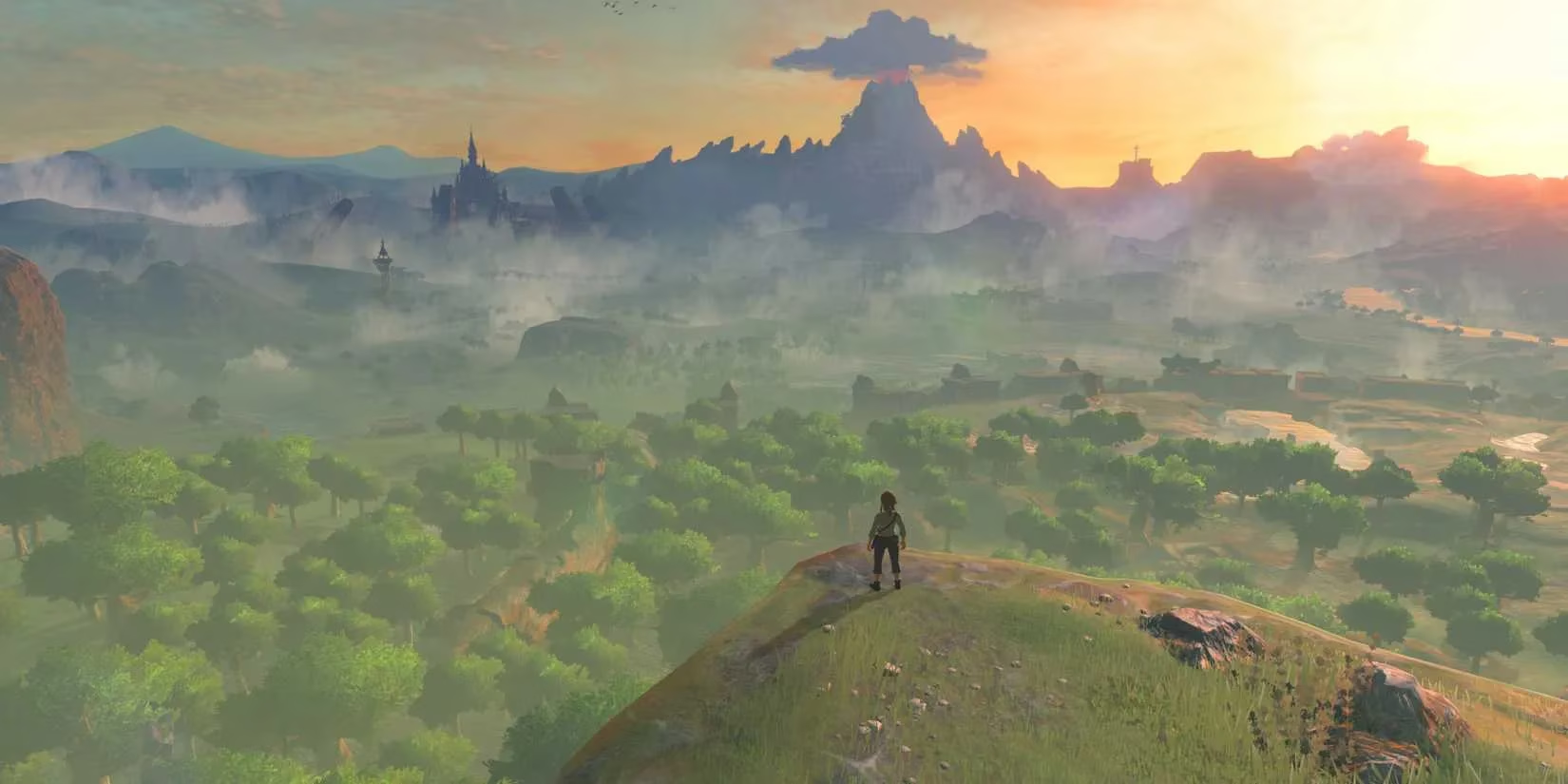
The Legend of Zelda: Breath of the Wild: The Open World Liberator 🌄
Nintendo looked at the decade's crowded open-world landscape—cluttered with map icons, endless checklists, and hand-holding quest markers—and asked a revolutionary question: "What if we removed all that?" The result was a masterpiece of minimalist design that trusted players to find their own fun. Hyrule became less a theme park with designated rides and more a wilderness to be truly explored. The game's physics-based systems created endless emergent possibilities: you could solve puzzles in dozens of unintended ways, defeat enemies with creative environmental manipulation, or simply spend hours watching the weather change over distant mountains. Its influence was immediate and profound—suddenly, every open-world designer reconsidered their relationship with player agency. The game proved that sometimes the most empowering design choice is knowing when to get out of the player's way.
The Last of Us: The Cinematic Bridge 🎬
Naughty Dog's post-apocalyptic masterpiece accomplished something remarkable: it made gamers out of people who didn't consider themselves gamers. By marrying Hollywood-quality storytelling with genuinely engaging gameplay, the game became a gateway drug for those who previously viewed games as childish distractions. Its emotional maturity—centering on middle-aged characters dealing with loss and redemption—expanded perceptions of what games could thematically tackle. The relationship between Joel and Ellie felt authentically human in ways that transcended the medium, thanks to motion-captured performances that rivaled Oscar-winning films. The game didn't just tell a great story; it demonstrated that games could tell stories in ways uniquely suited to their interactive nature, where player investment deepened emotional impact. It was the perfect ambassador to skeptics, proving games could be art without sacrificing entertainment.
Pokémon GO: The Real-World Invader 🌍
Niantic's augmented reality phenomenon did the unthinkable: it got people who hadn't touched a video game since Tetris to wander streets staring at their phones. The game's genius was twofold: it leveraged nostalgia for the Pokémon franchise while using AR technology to make gaming a social, physical activity. Parks filled with players hunting rare creatures, businesses became PokéStops, and suddenly gaming wasn't something you did alone in a dark room—it was a communal outdoor experience. The game's impact extended beyond entertainment, with studies showing positive effects on mental health through increased outdoor activity and social interaction. While the initial frenzy cooled, its legacy persists in every location-based AR game that followed, proving that sometimes the most revolutionary hardware for gaming isn't a new console but the world around us.
Hollow Knight: The Indie That Could 🐛
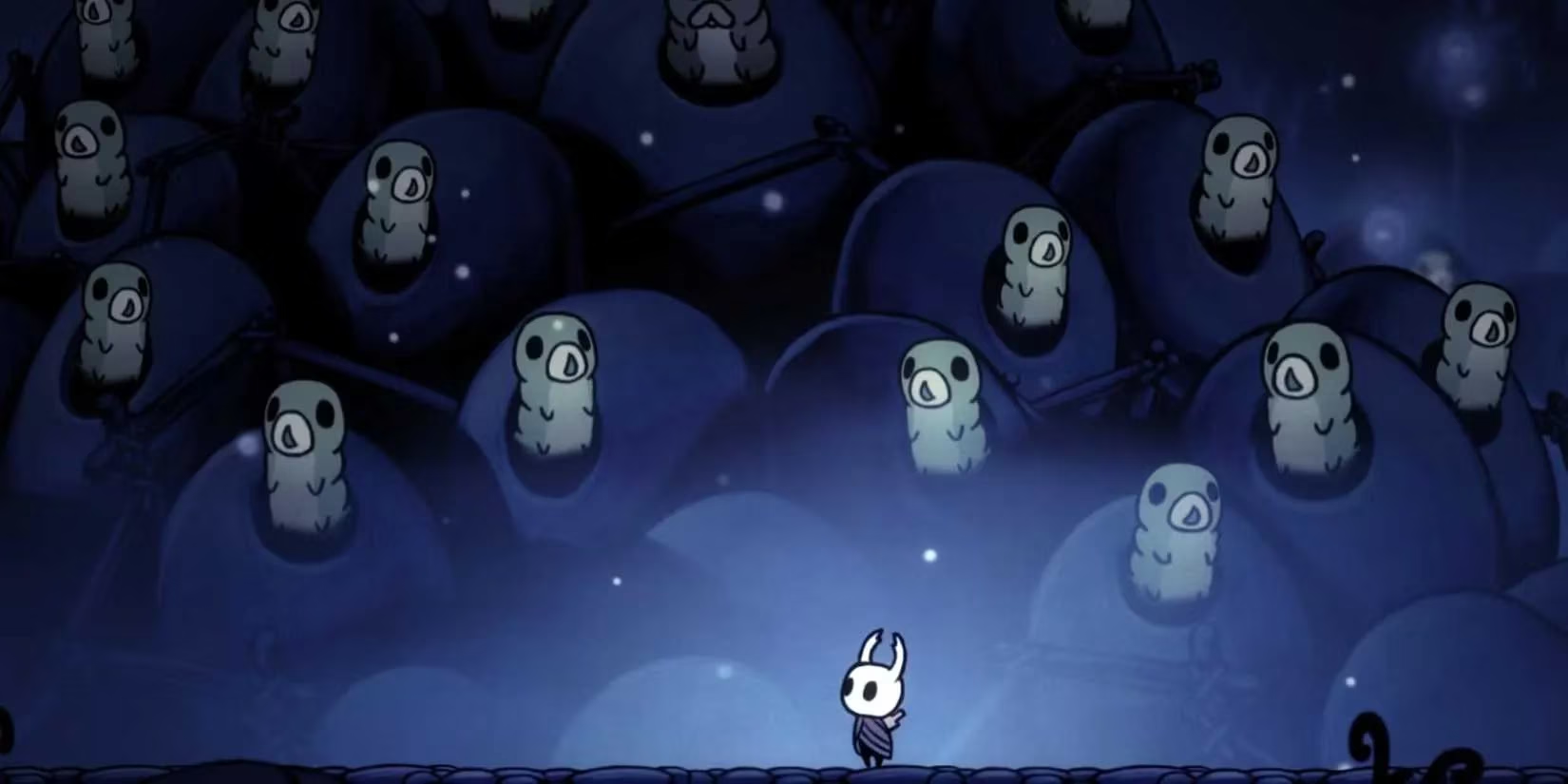
In a decade where indie games grew from quirky curiosities to legitimate blockbuster competitors, Hollow Knight stood as the perfect ambassador. Team Cherry's Metroidvania masterpiece demonstrated that small teams could create worlds as rich, mechanics as tight, and atmospheres as haunting as any AAA production. The game's success helped cement the Metroidvania renaissance, inspiring countless developers that atmospheric world-building and challenging gameplay could find commercial success. Its hand-drawn art style set a visual benchmark, its melancholic score became instantly iconic, and its labyrinthine world design taught players to appreciate getting lost. More than just a great game, it became a symbol of indie potential—proof that passion projects could compete on the same stage as corporate productions, just with more heart per pixel.
Looking back from 2026, these ten titans represent more than just great games—they're architectural blueprints that continue to shape the industry. Their lessons echo in today's releases: the importance of community (Skyrim), the power of platform thinking (Fortnite), the value of creative freedom (Minecraft), and the enduring appeal of masterful craftsmanship (Red Dead Redemption 2). They remind us that while technology advances and trends shift, the core of memorable gaming experiences remains constant: innovation born from constraint, emotion derived from interaction, and worlds that linger in imagination long after the console powers down. The 2010s didn't just give us great games; they gave us new lenses through which to view what games could be—and that perspective continues to enrich every pixel of our current gaming landscape.
Leave a Reply