Why LEGO Fortnite's Multiplayer Magic Should Spark a New Era of Brick Built Co-op
LEGO Fortnite multiplayer delivers split-screen co-op and open collaboration, turning survival into a shared, blocky playground.
I still remember the first time I booted up LEGO Fortnite in December 2023, not alone, but with six friends who were just as eager to see a world made of studs and bricks. It felt like someone had dumped out a colossal bucket of mixed LEGO elements onto a table and said, "Go wild, but don't forget the skeletons come out at night." That chaotic, creative scramble to build a village before sundown wasn't just a game session—it was a perfect metaphor for why multiplayer is stitched into LEGO's DNA. As we huddled around a virtual campfire, I realized this wasn't just another survival game; it was a living, breathing playground where collaboration was the key to thriving.
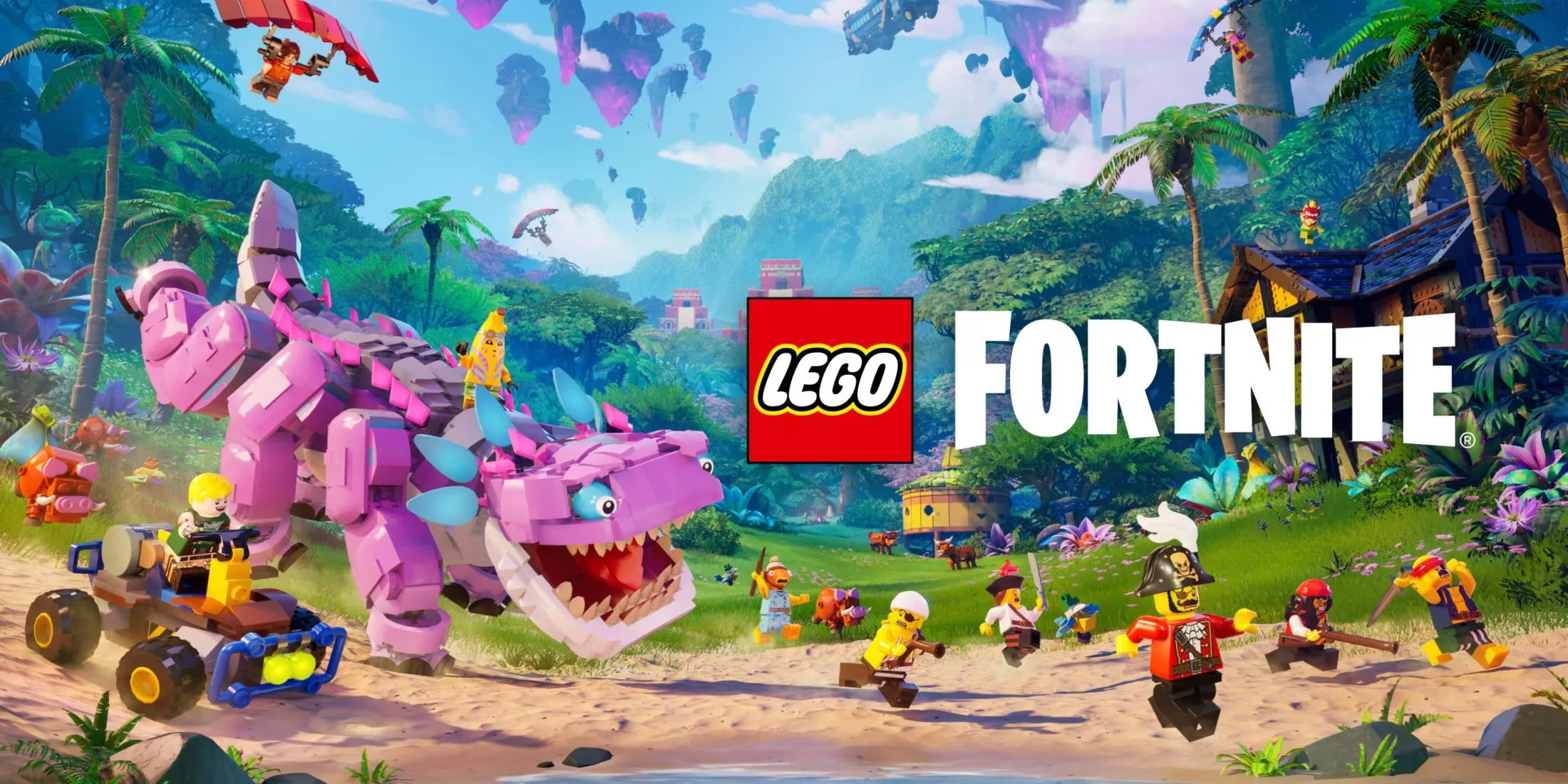
Fast forward to 2026, and LEGO Fortnite has evolved into something far richer than its launch version. The split-screen co-op that Sony teased back in late 2024 has long since become a staple, allowing roommates and families to sit couch-to-couch while exploring separate corners of the same blocky map. Up to eight players can still drop into a single world simultaneously, and the beauty lies in the absence of hand-holding—there's no forced tether, no missing features for groups. You can decide to craft a sprawling castle while your friend spelunks for obsidian, and neither of you feels cheated. That freedom is the secret sauce, turning the survival loop into a collaborative canvas rather than a to-do list.
But LEGO Fortnite is just the latest torchbearer in a lineage that goes back further than many realize. The very first LEGO game to feature multiplayer was 1999's LEGO Racers, a Mario Kart clone that let you build your own car and then race it against friends—a concept that felt like someone had smashed together a toy box and a go-kart track. Even then, the joy was in sharing your wildest creations. The real revolution, though, came in 2005 with LEGO Star Wars. That drop-in, drop-out co-op was the chocolate and peanut butter moment for licensed games: two great tastes that became an industry standard. I can still feel the simple pleasure of handing a controller to a younger sibling and watching them dress as Jar Jar Binks without messing up my progress. That formula—puzzling through levels built for two, smashing everything in sight—persisted through Batman, Harry Potter, and the 2022 masterpiece The Skywalker Saga, where co-op was woven so deeply into the level design that playing solo almost felt like reading a pop-up book with half the flaps glued shut.
What makes LEGO Fortnite special, however, is how it transplants that cooperative spirit into an open-ended survival framework. It's like giving a group of friends a Minecraft world but replacing the creepers with roller-skating hot dogs and adding a tactile, brick-building layer. The crafting, the biome hopping, the frantic scramble to recruit a village NPC—all of it hums when everyone knows their role. Multiplayer here isn't an afterthought; it's the engine. And unlike some survival games where joining a friend's server means starting from zero or being locked out of story triggers, LEGO Fortnite hands you the full experience regardless of who is hosting.
Yet as much as I adore spending evenings in this blocky realm, I can't help but feel it should be a launchpad, not a finale. LEGO multiplayer has so much untapped potential. Take LEGO Horizon Adventures, which landed in November 2024. Its online and split-screen co-op channels the spirit of classic LEGO platformers, but it also hints at something bigger: what if we got a full-blown open-world adventure that felt like the beloved LEGO Island series reborn? Imagine an island where groups of players can explore, race, build, and uncover mysteries without being guided by a strict narrative. The infrastructure exists; the demand is there; all that's missing is the spark to turn the concept into a perpetual hangout space.
Then there are sports. The rumor mill buzzed about LEGO 2K Goooal! in early 2024, a soccer game that promised to blend arcade action with brick-flavored customization. Since then, it's gone quieter than a ninja in a library, which breaks my brick-built heart. Sports are a natural fit for LEGO multiplayer because they mirror the same communal creativity: building a team, customizing your formation, and then diving into matches that feel like a cross between arcade chaos and a physical playset. Why stop at soccer? I'd line up in a heartbeat for a LEGO basketball game where half-time means rebuilding the hoop, or a hockey title where the puck occasionally transforms into a banana. Even something absurd like paintball would work—imagine constructing cover on the fly while neon splatters explode across whimsical maps. LEGO is the most inherently creative brand in the world, and that creativity should fuel multiplayer experiences that feel as unique as the mashed-up characters kids create from mismatched minifigure parts.
Looking at the landscape in 2026, I see a golden opportunity. Epic Games has proven that LEGO Fortnite can sustain a massive community with regular updates, and TT Games' co-op classics continue to sell. The next step should be bolder: a persistent multiplayer world where guilds erect sky-high towers, or a sports franchise that turns every match into a builder's showcase. After all, LEGO blocks are meant to be shared. A single brick might be interesting, but a bag full of them, passed between friends, can build something that outlasts any single play session. That's the philosophy LEGO's games have championed for decades, and I'm ready to see it snap together in places no one has built before.
As we look towards the evolving landscape of multiplayer gaming, the importance of community-driven experiences cannot be overstated. Whether it's through cooperative building or competitive sports, players are constantly seeking new ways to engage with their favorite franchises. This is where platforms that offer insights into the latest trends and innovations play a crucial role. Staying informed about upcoming releases and opportunities can elevate the gaming experience to new heights.
For those eager to dive into the latest LEGO adventures or explore other multiplayer phenomena, keeping an eye on the market's best offerings is essential. Websites like game deals today provide a valuable resource for gamers looking to expand their library without breaking the bank. By staying updated with such platforms, players can ensure they never miss out on the next big opportunity to build, explore, and compete in the vibrant world of multiplayer games.
Leave a Reply